

Building Hope from the Ground Up
Building Hope from the Ground Up: Community-Based Suicide Prevention through a Public Health Lens
Every 40 seconds, someone dies by suicide. Yet behind that statistic is a human life—a colleague, student, friend, or family member. The good news? Suicide is preventable. But prevention requires more than isolated treatment—it demands a community-wide response grounded in public health principles.
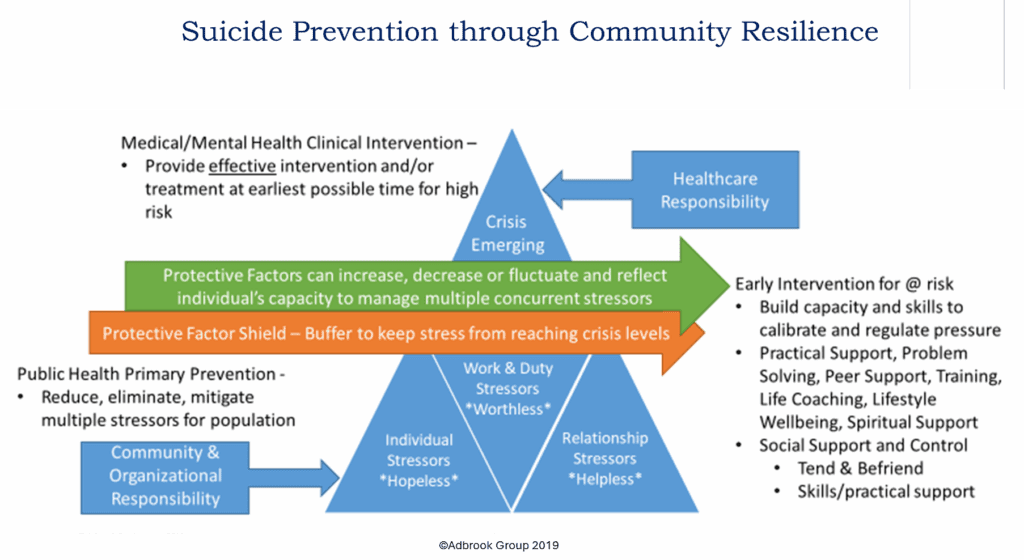
This post introduces a research-backed report exploring community-based suicide prevention strategies through the lens of the primary–secondary–tertiary prevention model. From building resilience in communities to early intervention and long-term clinical support, we explore how a layered approach can save lives.
Why a Public Health Model?
Suicide prevention has long been the domain of mental health professionals, but relying solely on clinical intervention misses the broader societal context. A public health approach expands the focus from individuals in crisis to populations at risk—engaging communities, institutions, and systems to build protective environments.
This model is structured around three levels of intervention:
🟢 Primary Prevention: Building Resilient Communities
Goal: Prevent suicidal ideation before it begins by fostering connection and resilience.
- School and workplace mental health programs
- Gatekeeper training for educators and community leaders
- Stigma-reducing media campaigns
🟡 Secondary Prevention: Early Detection & Coping
Goal: Identify individuals at risk and support them before crises escalate.
- Routine mental health screening in primary care
- Brief interventions like safety planning
- Peer-led support programs and community outreach
🔴 Tertiary Prevention: Clinical Intervention & Recovery
Goal: Provide treatment, post-crisis support, and prevent recurrence.
- Crisis response and mental health support services
- Postvention for families and affected communities
- Long-term psychiatric and therapeutic care
Case Study: U.S. Air Force Suicide Prevention Program (AFSPP)
The U.S. Air Force Suicide Prevention Program (AFSPP) stands as one of the most effective large-scale suicide prevention initiatives ever implemented.
Key facts:
- Launched in 1996, achieving a 33% reduction in suicides
- Integrated 11 initiatives across legal, medical, and community sectors
- Mandatory suicide event reviews, peer support, and leadership accountability
Read the full study by Knox et al. (2003)
What the Research Shows
Our full research report includes:
- Case studies from Hong Kong, Iran, Japan, and the U.S.
- Evidence-based programs for schools, clinics, and communities
- Evaluation of primary, secondary, and tertiary interventions
- A summary table outlining effective prevention strategies
Access the Full Report
Click here to read the full research report
Final Thoughts
Suicide is complex—but community is powerful. A person’s well-being is influenced not only by their personal challenges, but by the support networks, systems, and environments around them.
Through the lens of public health, we have the opportunity to move from crisis response to genuine prevention.
Let’s make prevention everyone’s responsibility.